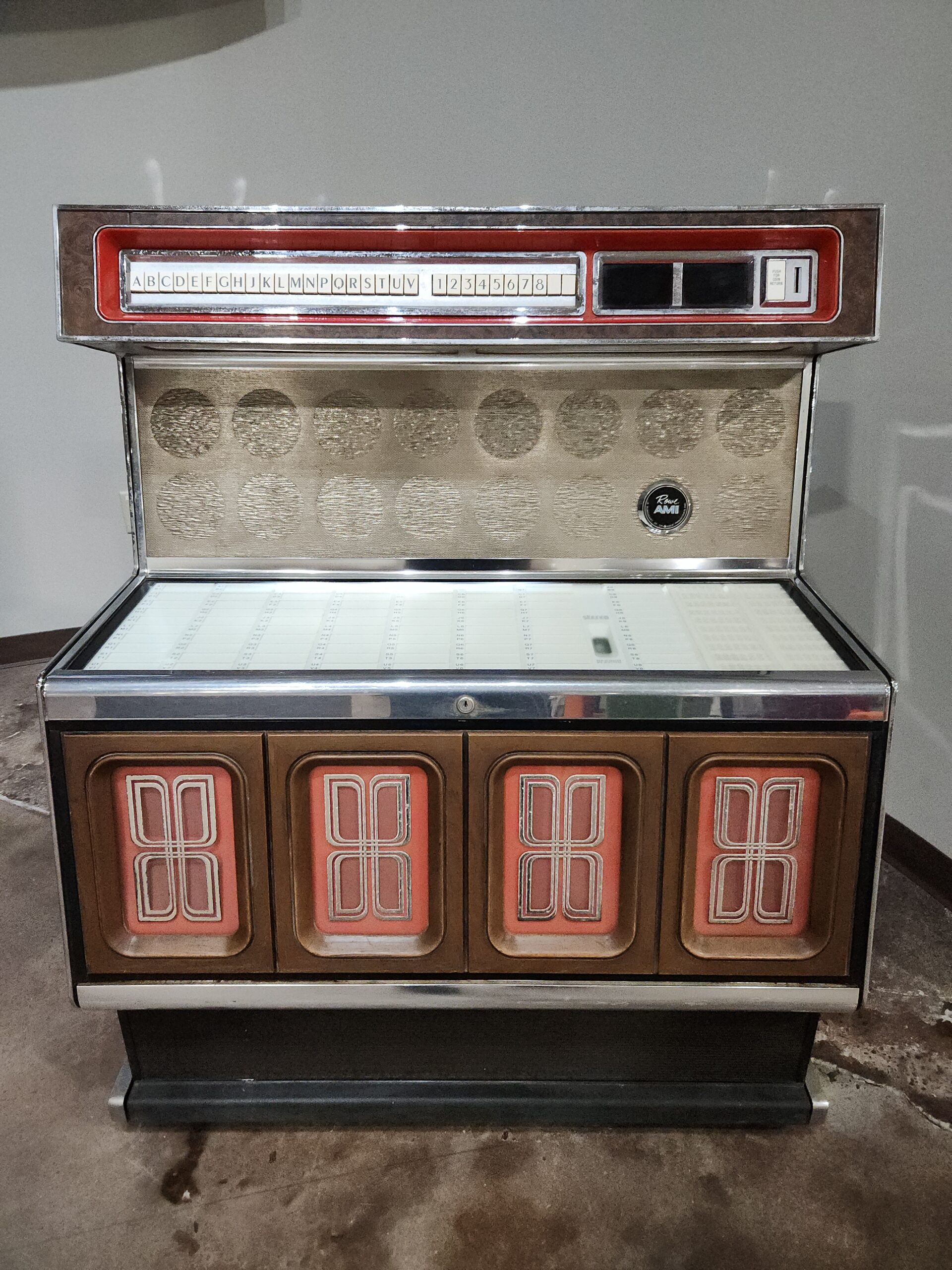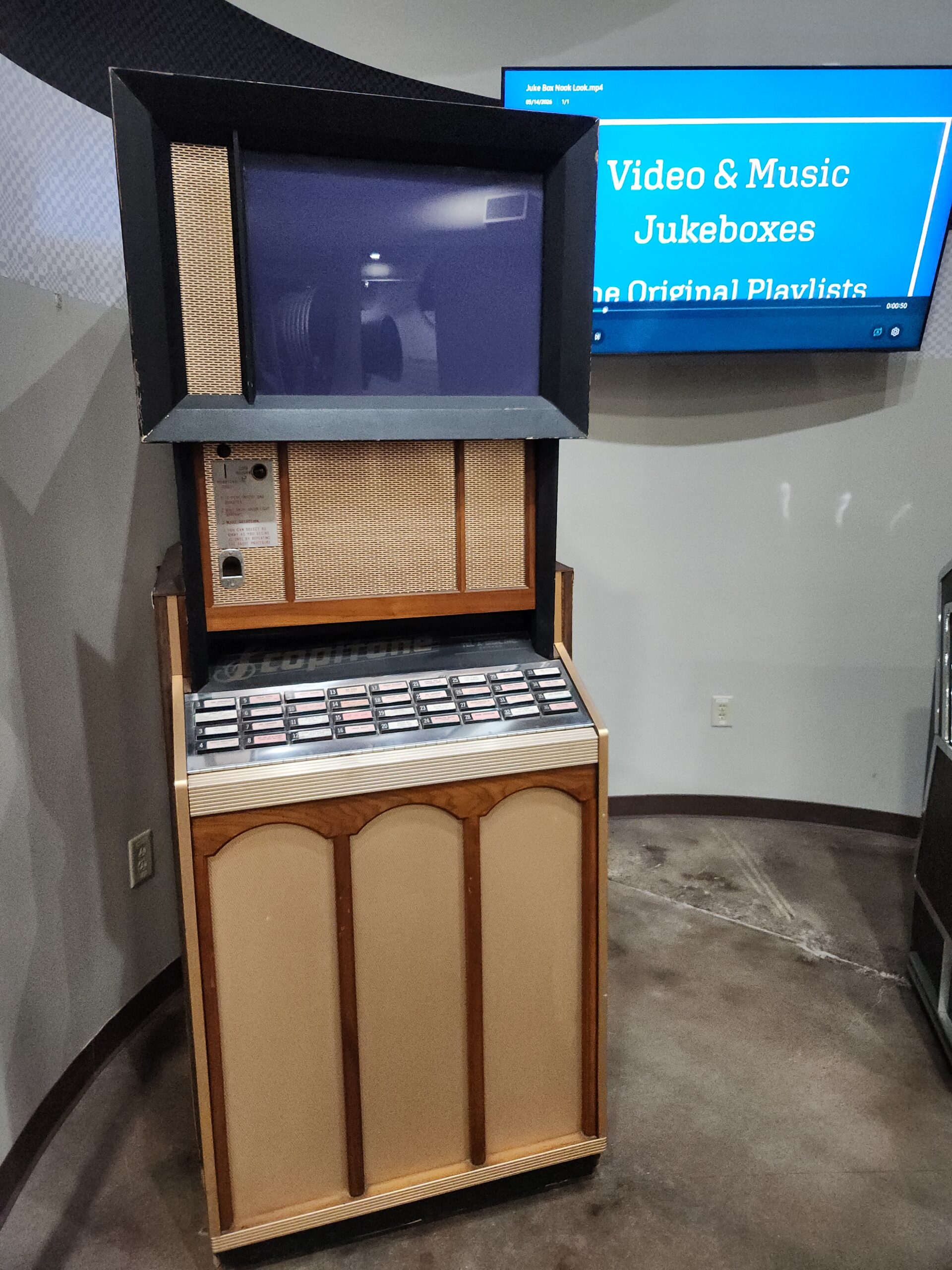
Rowe TI-1 Jukebox and Scopitone 450 (Nook Look)

Rowe TI-1 Jukebox and Scopitone 450 (Nook Look)

Jukeboxes
Jukeboxes
Jukeboxes have played an important role in the history of music for over a century. The first coin-operated music machine was introduced in 1889 in San Francisco by Louis Glass and William S. Arnold. Early versions did not have speakers; instead, listeners used tubes to hear the music.
The term “jukebox” originates from “juke joints,” social spaces in the American South where people gathered to listen to music and dance. Jukeboxes became especially popular during the Great Depression, when they provided an affordable form of entertainment. By the 1940s, hundreds of thousands of jukeboxes were in use across the United States.
A key feature of the jukebox is the music selection system. Each machine contained a limited collection of vinyl records, often 45 RPM singles. Early on, the records played in order—the customer could not select the song. Later innovations added a mechanical arm that would locate the correct record, place it on a turntable, and play it automatically, allowing the user to control what music played.
Jukeboxes helped shape popular music. Artists such as Elvis Presley and Chuck Berry reached wider audiences as their songs were selected and replayed by listeners. The publication Billboard tracked jukebox popularity, and frequent plays often signaled a hit song.
In addition to their musical impact, jukeboxes became known for their distinctive design. Manufacturers such as Wurlitzer produced machines with colorful lighting, curved glass, and visible moving parts. These features made jukeboxes both functional and visually appealing.
Jukeboxes also served practical purposes. During World War II, they were placed on military bases to improve morale. In public spaces, music selection could influence customer behavior, encouraging people either to stay longer or to leave more quickly.
Although modern jukeboxes are now digital and use streaming technology, the classic jukebox remains a recognizable symbol of music, design, and social life in the twentieth century.

IMAGES