Raytheon
Apollo DSKY

DSKY: A historic first in Human-Computer Interface
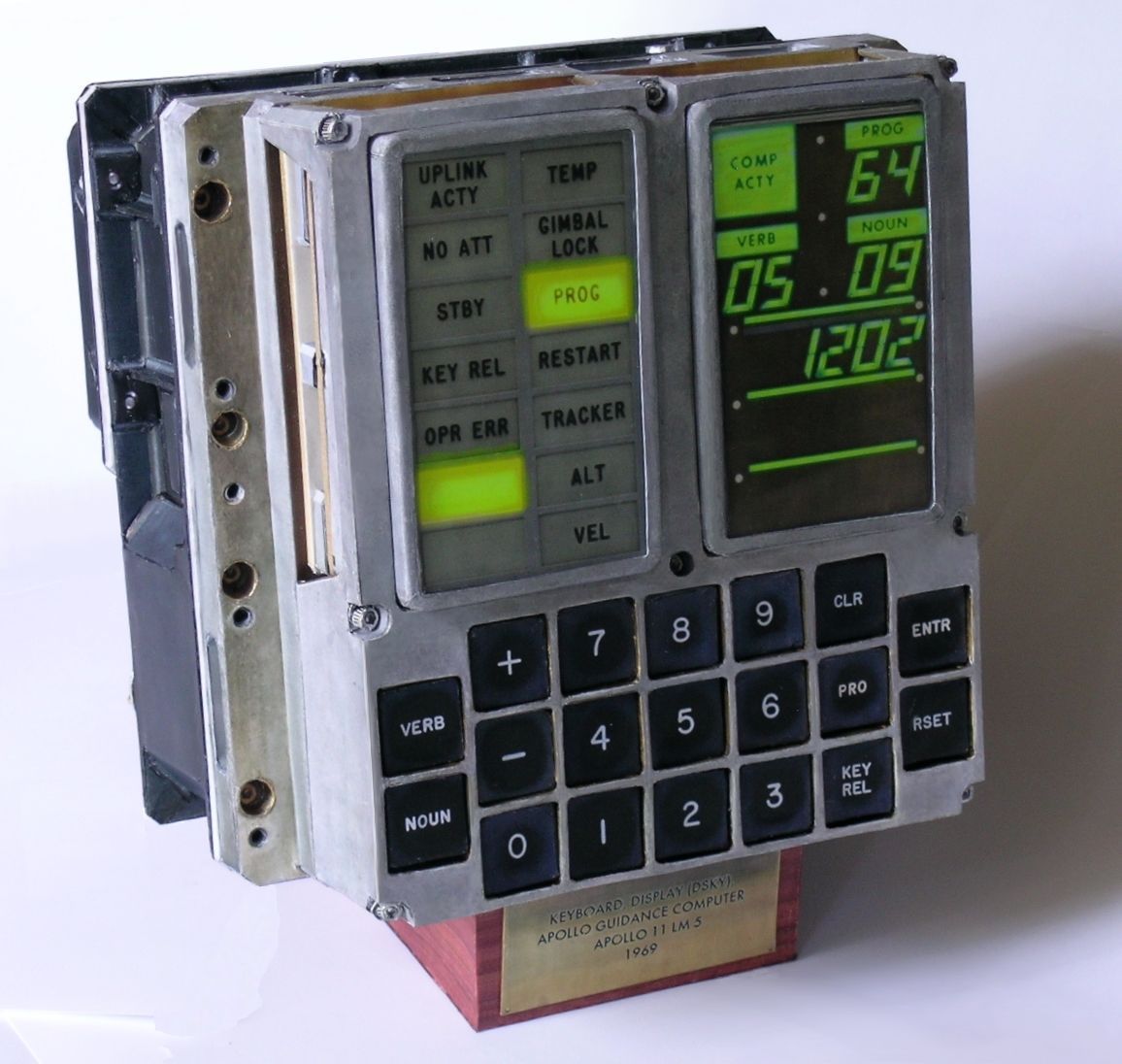
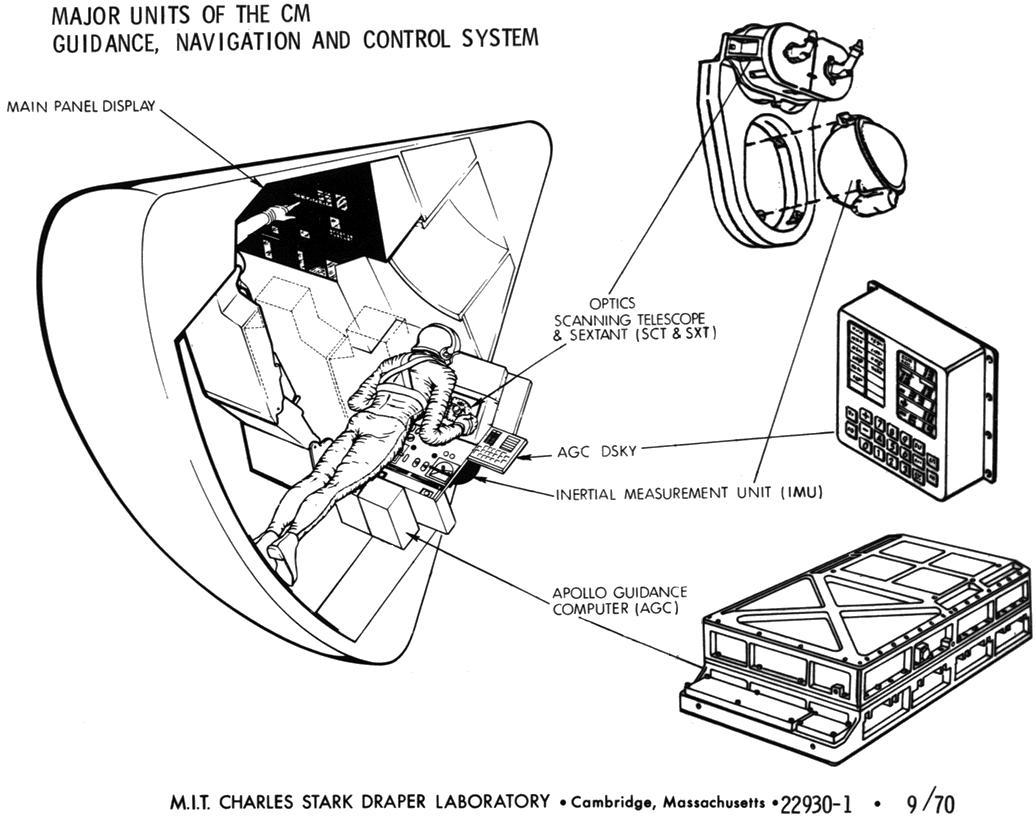
The DSKY was a historic advancement in how humans interacted with computers; it was the first time humans could ask questions and get immediate answers from their system. It was also the first time human lives depended directly on their computers. Instead of a bulky CRT display and keyboard, Apollo astronauts used the Display Keyboard (DSKY), a simple interface to the Apollo Guidance Computer (AGC), one of the first integrated circuit-based computers. The DSKY, designed by the Massachusetts Institute of Technology and manufactured by Raytheon, used LEDs and buttons to run control guidance, navigation, and control programs during the Moon landing.

Flying a spacecraft with nouns and verbs

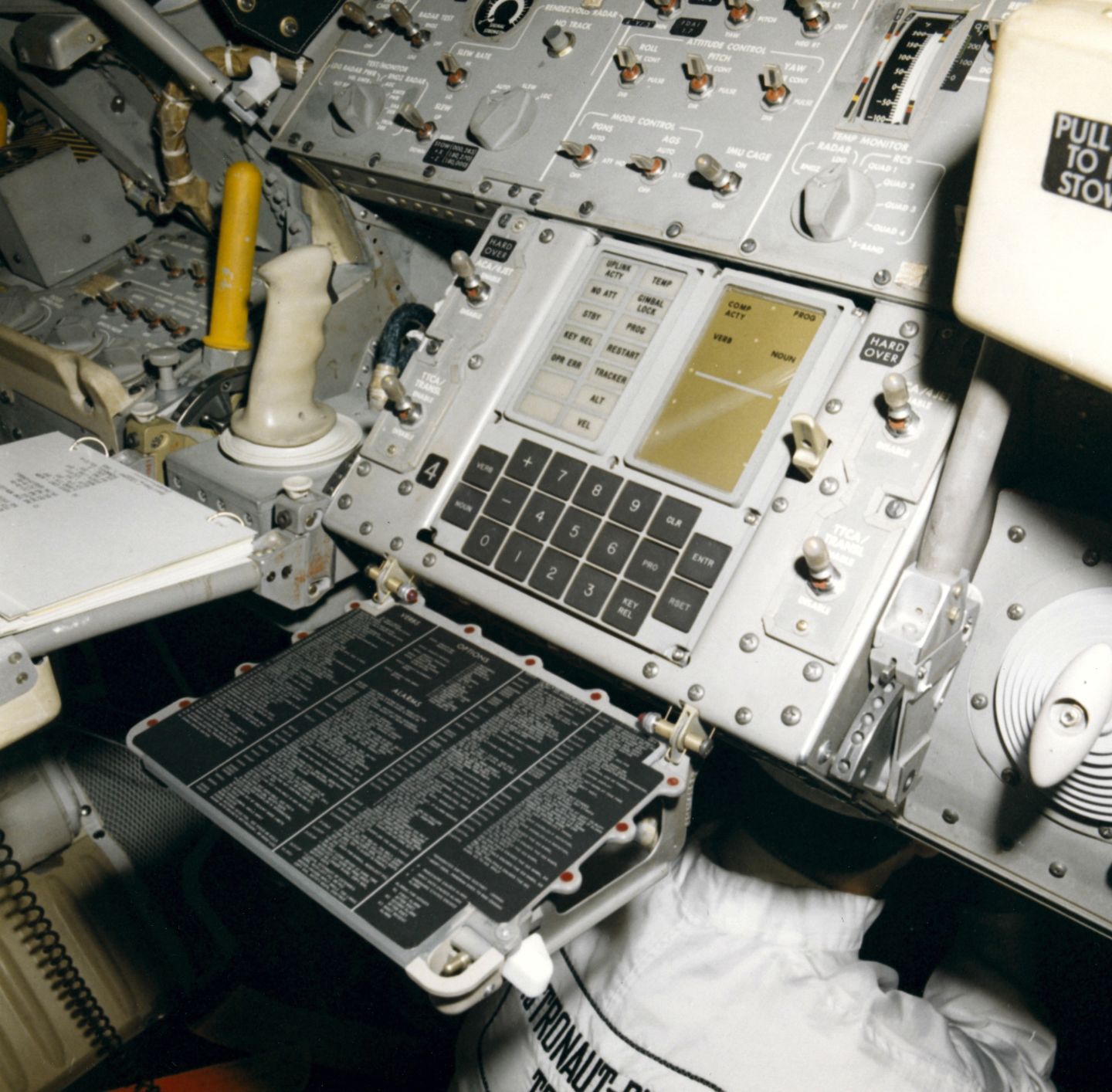
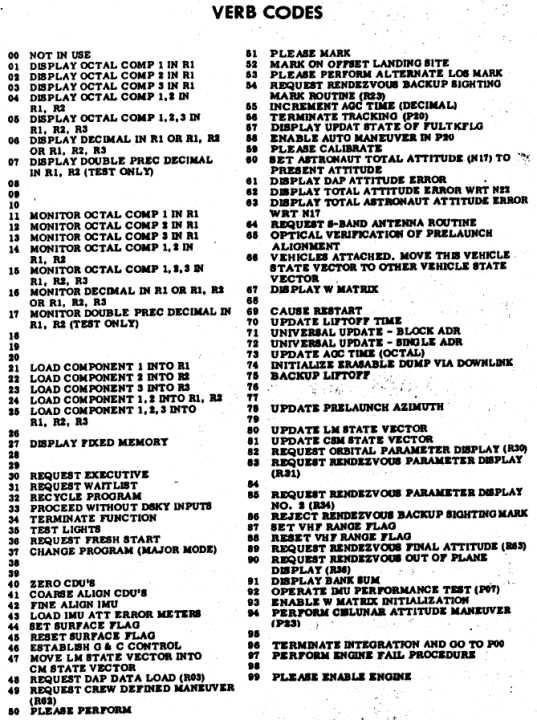
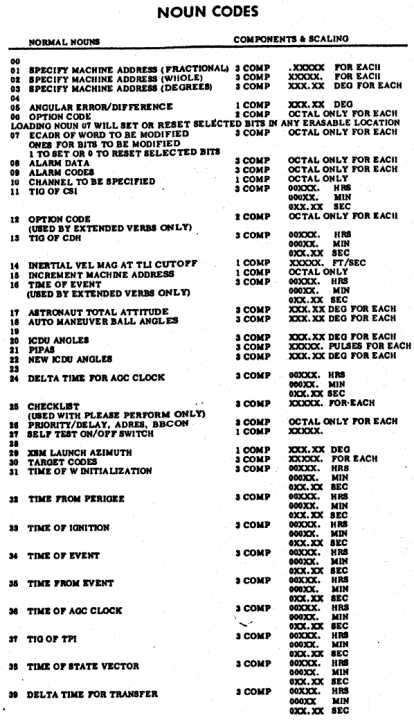
The Apollo DSKY consisted of status lights, numerical indicators, and a small numerical onboard keyboard that allowed astronauts to enter numerical codes in a verb-noun order to query flight data. The Apollo DSKY contained 19 keys and a 21-digit display. Each Command module had two DSKYs—one on the main control panel and one in the lower navigation bay. Each Lunar Module had an identical DSKY.
Astronauts affectionately referred to the AGC and the DSKY as the “Diskee.” The simple yet powerful interface acted as an additional crew member, allowing astronauts to adapt to error conditions and manage safe landings.
Before DSKY, computers were addressed by stacks of punched cards and answers came hours later in the form of a paper print-out. To control their spacecraft, the astronauts needed immediate answers, which necessitated a revolution. DSKY is historic for pioneering “Humans in the Loop.”

IMAGES


CHARTS

VIDEOS