Apple Computer

Apple II

The PC that started it all

Designed by Steve Wozniak and aimed at the consumer market, the Apple II debuted in 1977 at the West Coast Computer Faire. It became one of the first successful mass-produced microcomputers, featuring the ability to display color graphics and play sound.

 

The PC that started it all

Since the Apple II aimed at consumers rather than hobbyists, Apple designed the machine to function straight out of the box–quite an innovation for the time, when most computers were sold as kits to be assembled by the user. It featured a built-in keyboard, BASIC Programming, color graphics, seven expansion slots, and a direct connection for a television monitor.

The Apple II became popular in classrooms because its open architecture made it easy to create third-party software. It received many upgrades and continued in the market for 15 years. In fact, it became the first widespread computer in US schools.

Initially, the Apple II provided the Apple DOS operating system in ROM, and the only storage available was with a cassette tape.

IMAGES
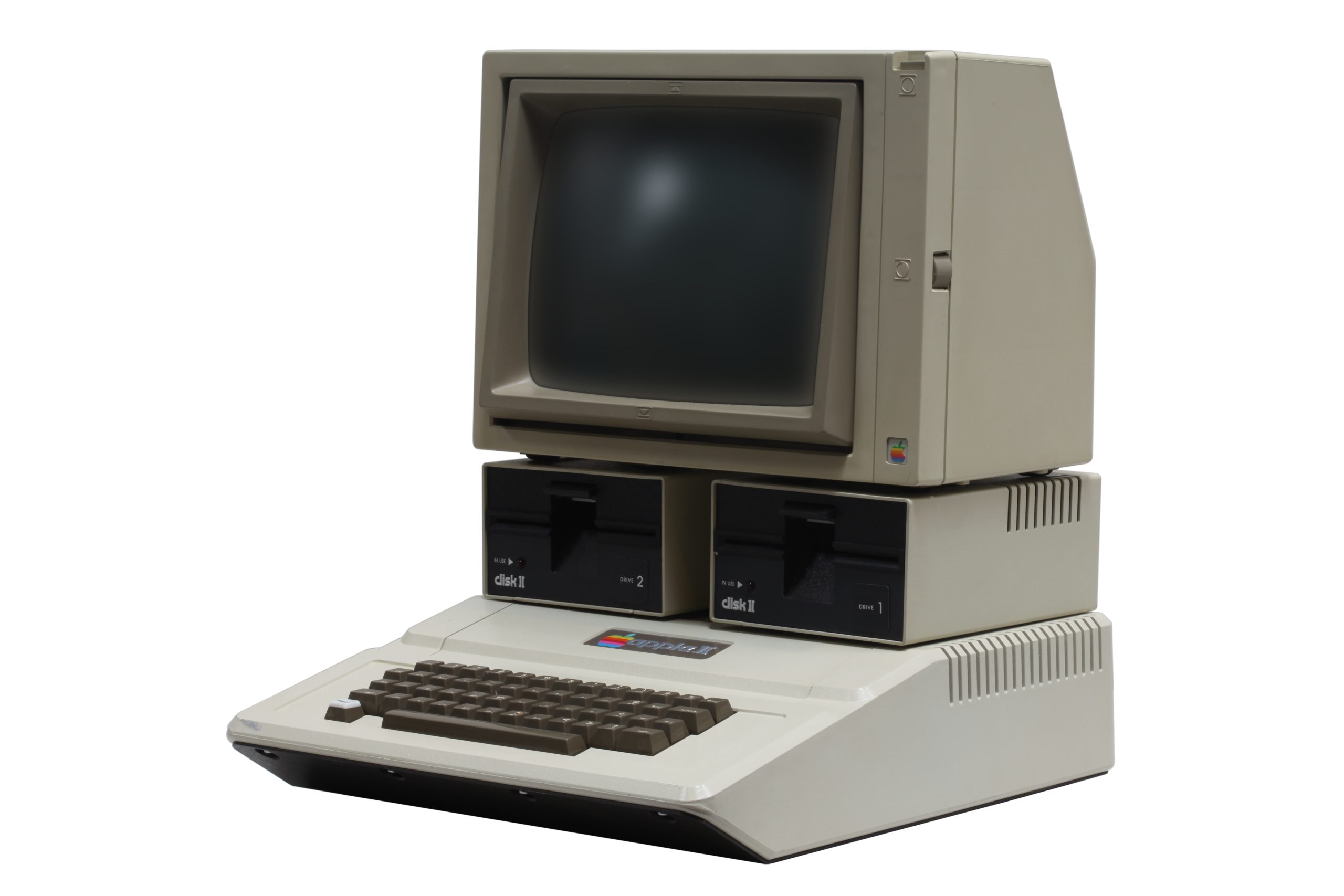
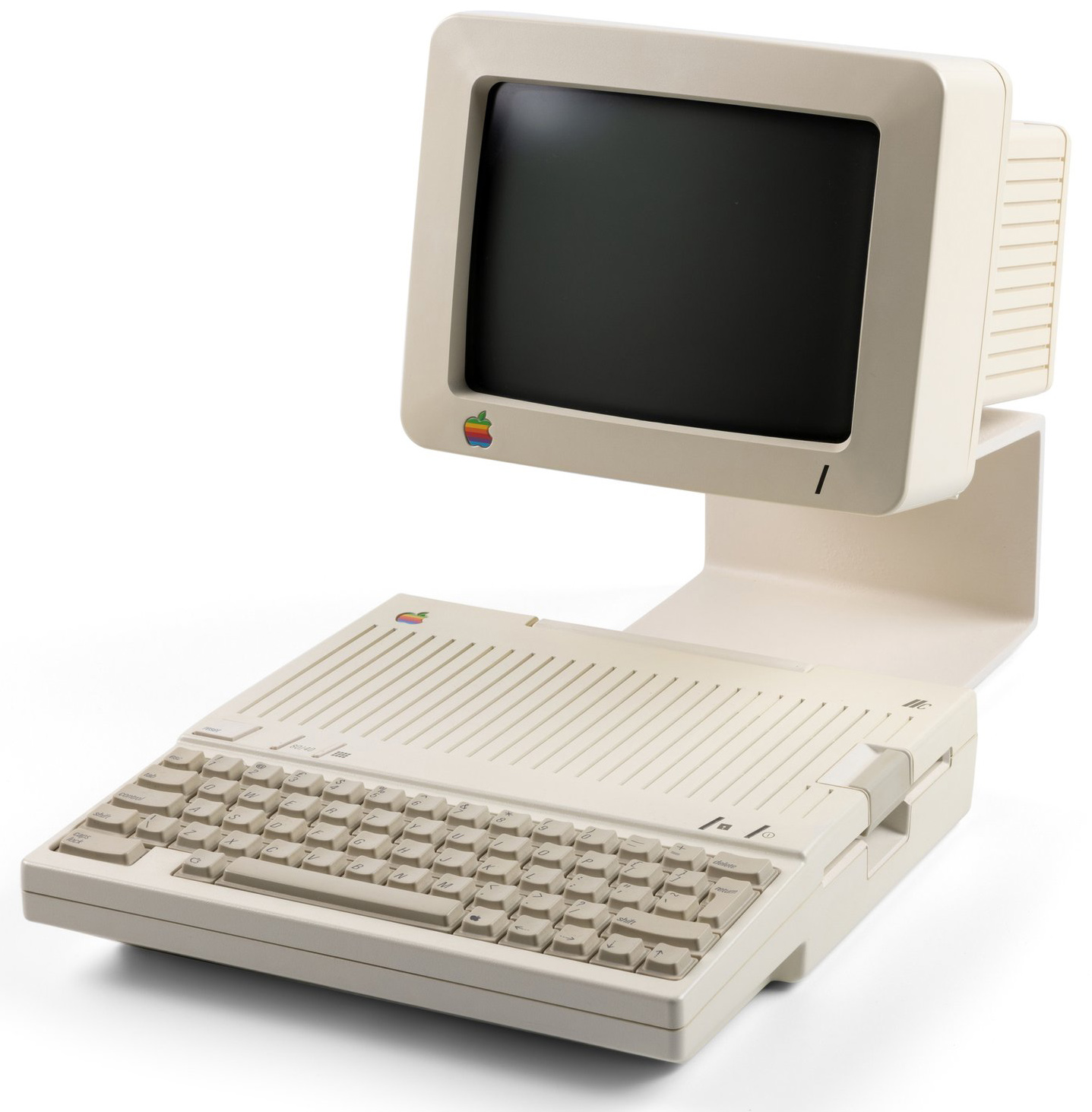
Designed by Steve Wozniak and aimed at the consumer market, the Apple II debuted in 1977 at the West Coast Computer Faire. It became one of the first successful mass-produced microcomputers, featuring the ability to display color graphics and play sound. In this visual, the monitor sits atop two floppy disk drives.

Compared with the Apple 1 and other early PCs, the sleek styling and attention to design of the Apple II set Apple products apart- a strategy still in force at Apple today.

With 16 colors and simplified graphics, Apple II included functions such as word processing, calculations, and games.

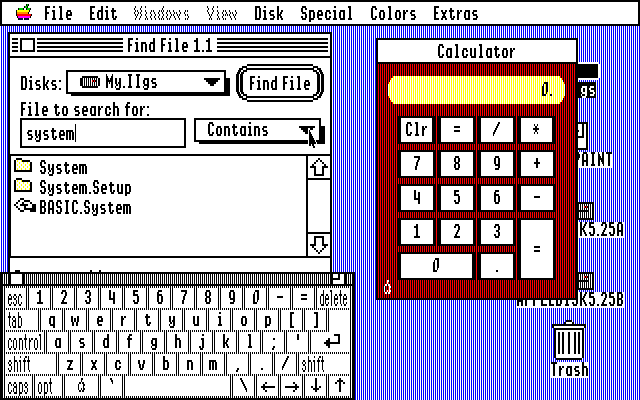
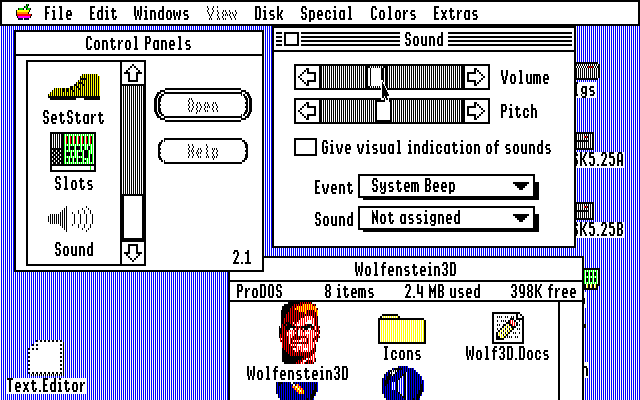
Apple II initiated the use of sliders and icons, which have stayed a part of the Apple user interface to this day.

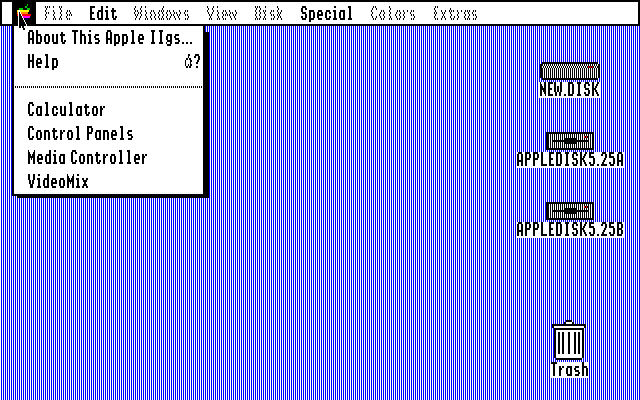
The early Apple II screen used the "Desktop and Filing Cabinet" paradigm. When compared with the command line prompt of competing personal computers of the day, the Apple II felt dramatically easier to use. Pull down menus were a prominent feature of the MacOS.

Early personal computers used monochrome screens. Apple II's 12 colors opened up new possibilities in gaming.

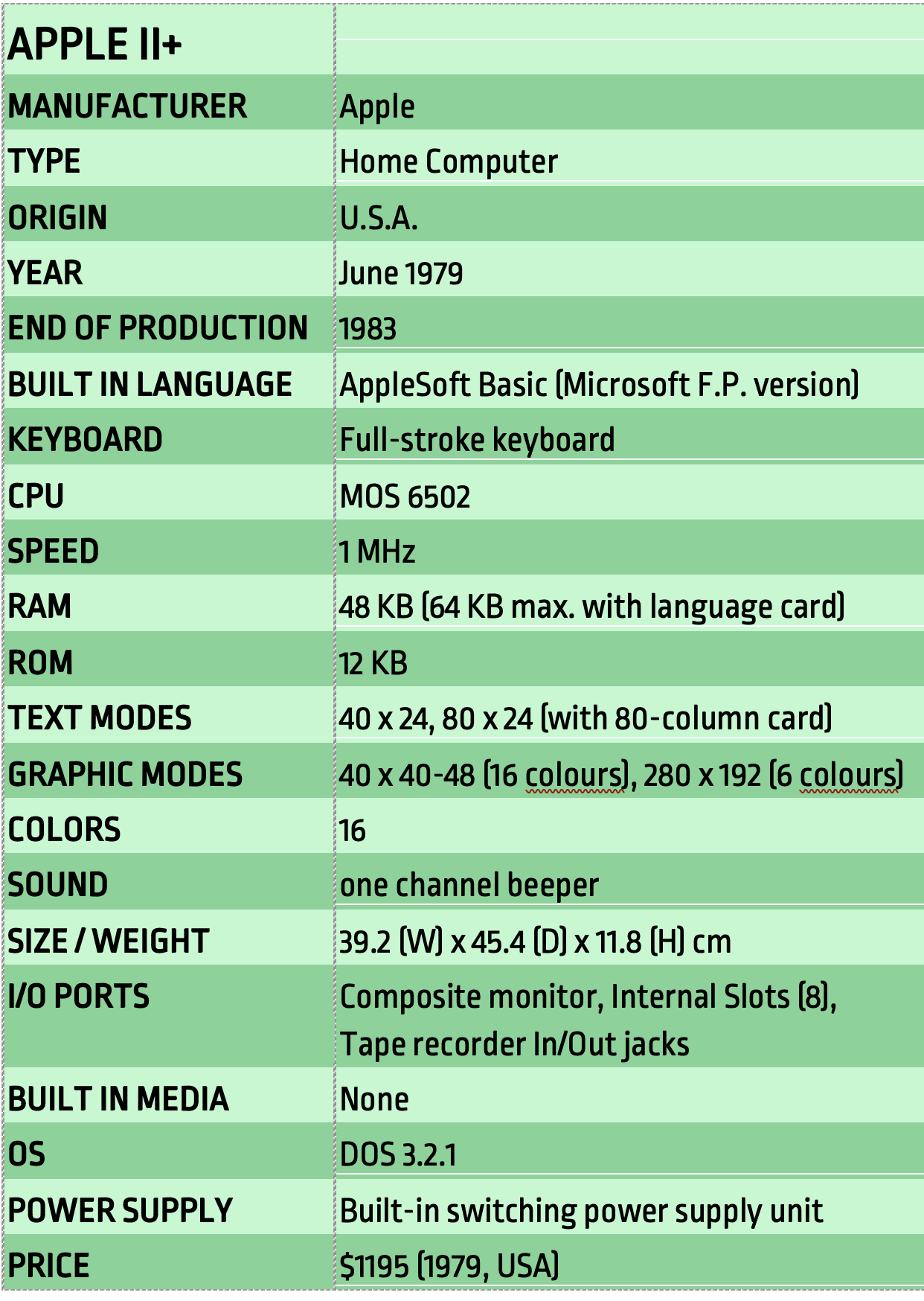
Overview of the Apple II+, the successor model to the Apple II

3D VIEWER

Apple II 1977
Apple II Disk Storage 1978
Apple II Image Writer 1985