Connection Machine CM2

Connection Machine CM2

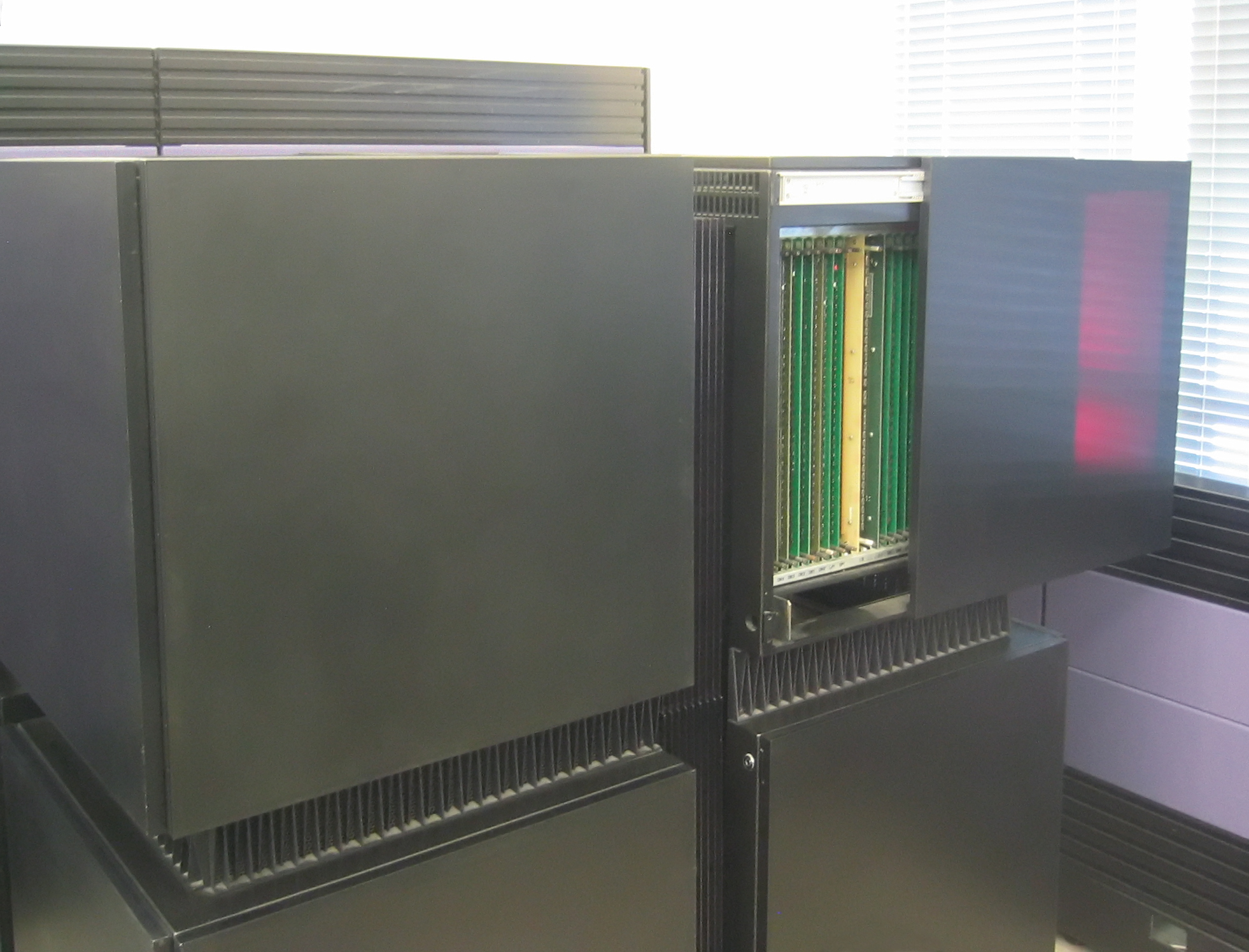
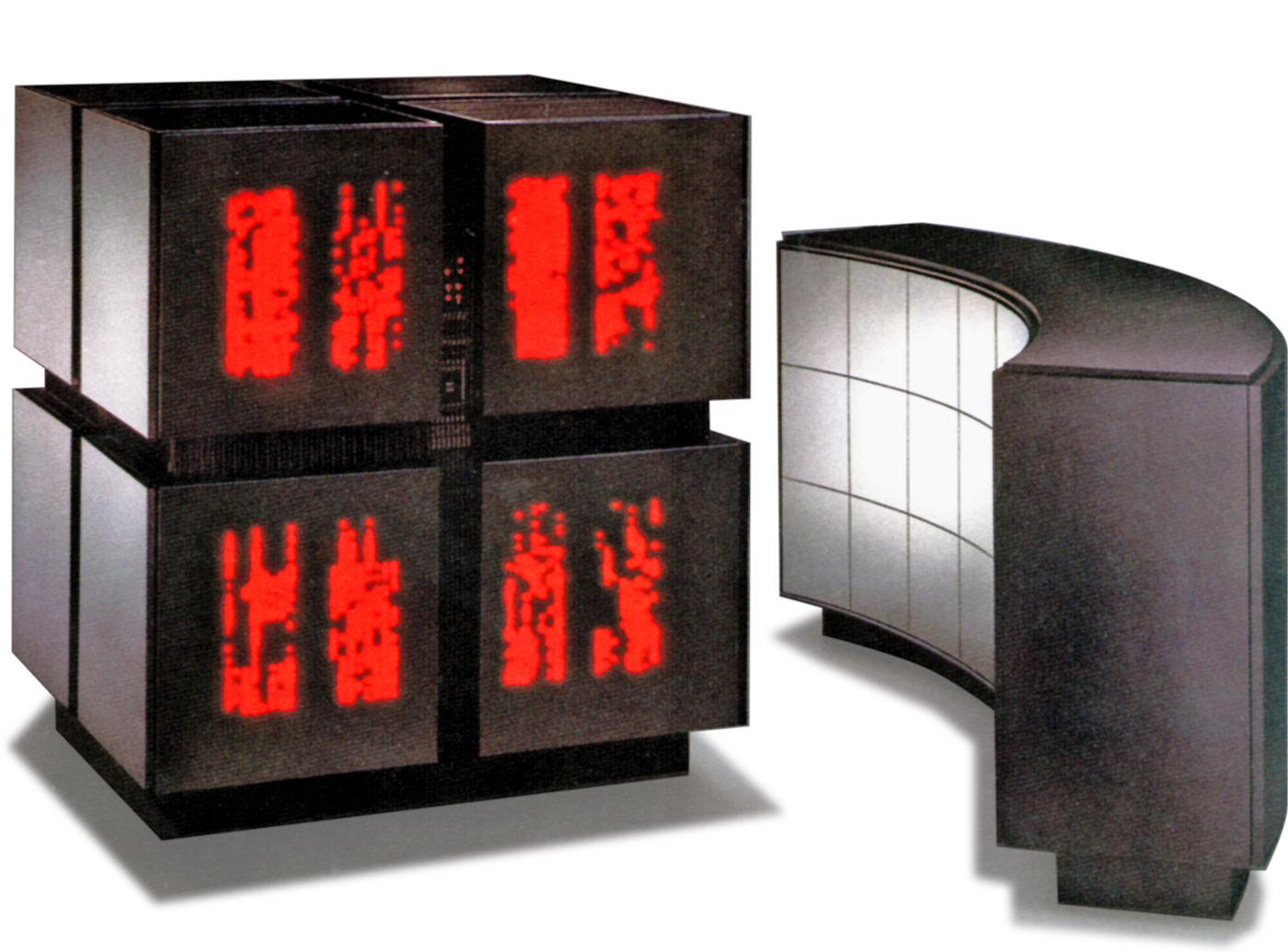
The Connection Machine CM2 was a massively parallel supercomputer developed by Thinking Machines Corporation in 1987. Using the then-radical architecture inspired by noted physicist Richard Feynman and created by Danny Hillis, it was modeled after the human brain and distributed data over thousands of 1-bit processors simultaneously to tackle artificial intelligence problems. The CM2 stood in contrast to the Cray supercomputer architectures that relied on a few, powerful processors.

Connection Machine CM2
The name connection machine came about because of the dynamic way software could control data communications between processors, depending on the application. With the focus on connections between processors rather than faster serial processors, the computer became known as the “Connection Machine.”
The CM2 architecture, software, and hardware shaped the future of technology. Not only did Richard Feynman use a Connection Machine to run simulations of quantum computing, but the architecture inspired Google founder Sergey Brin to adopt parallel computing techniques learned on a CM2.
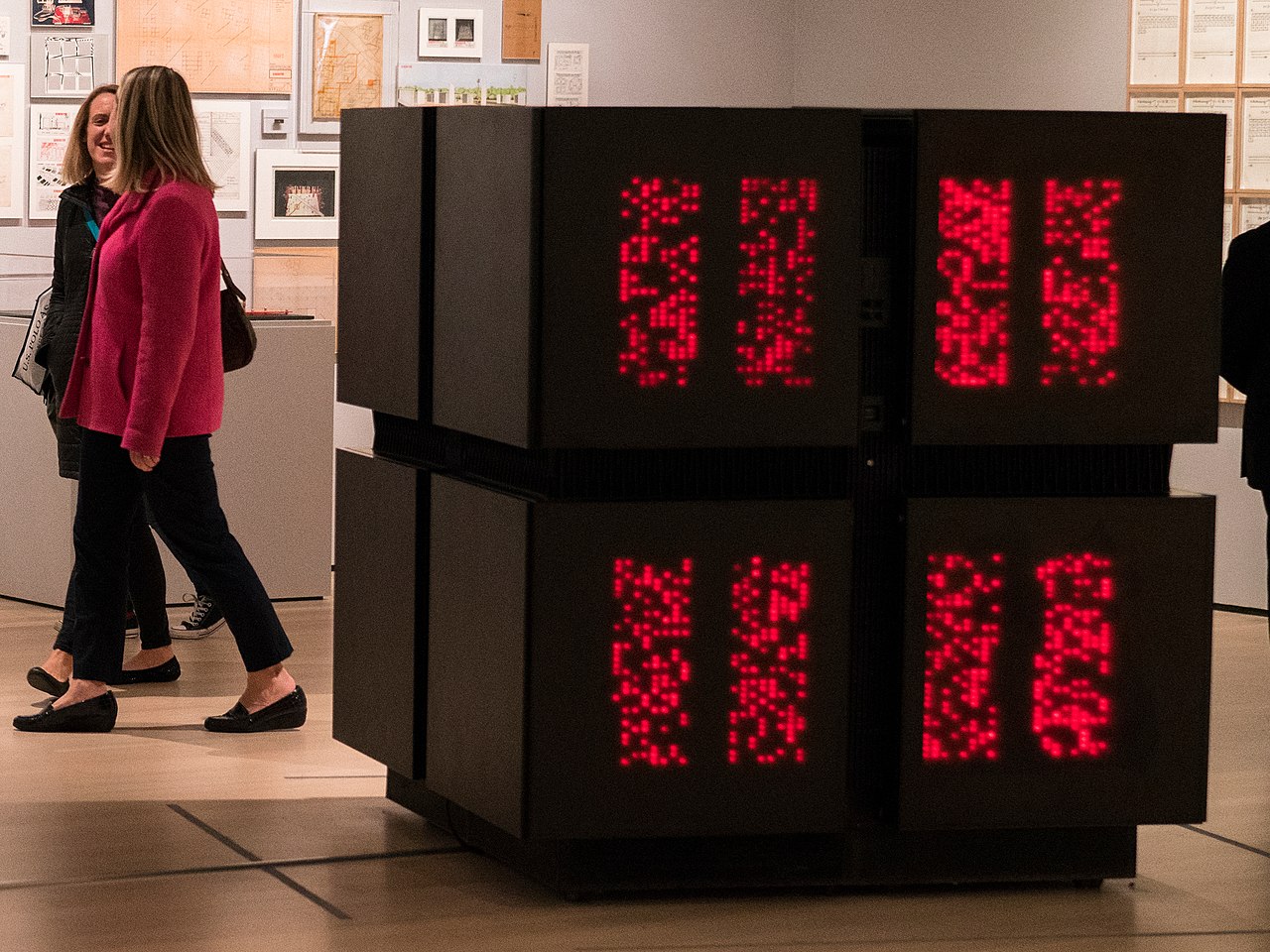
International artist Tamiko Thiel created the industrial design of the CM2, taking inspiration from a 15-foot-tall cube sculpture in New York City by the artist Tony Rosenthal. With 65,536 processors, it was impossible to use a traditional computer design. With input from Richard Feynman, Thiel came up with the idea of a hypercube. It was a cube of cubes and included panels full of LEDs, one LED for each processor. Each LED blinked when its processor executed an instruction and could be seen through perforated doors, creating a machine that was as visually impressive as it was powerful.
The Connection Machine influenced Steve Jobs’ decision on the design direction for the NeXT computer and future computer designs.
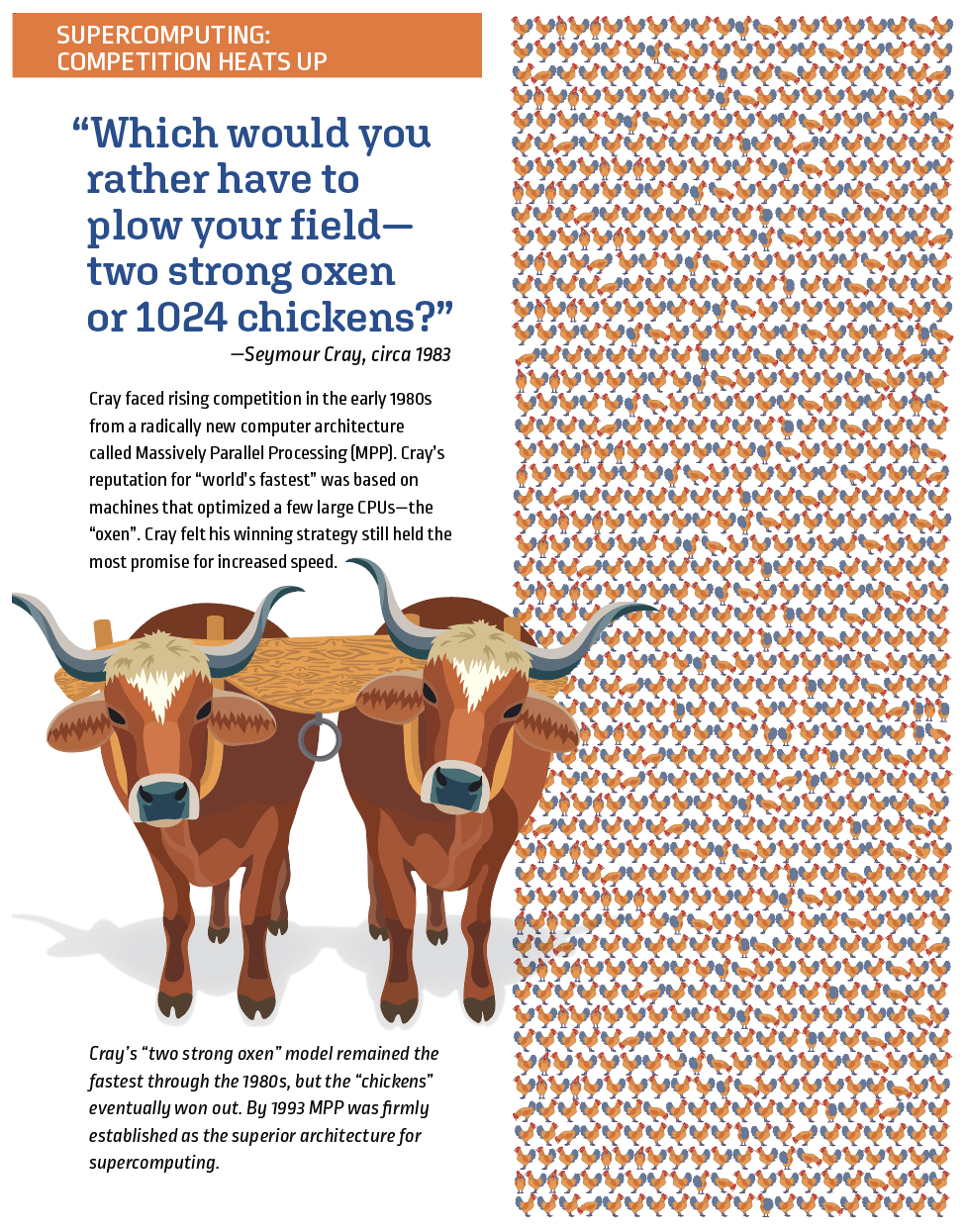
Supercomputing genius Seymour Cray, who pioneered supercomputing, never embraced massively parallel processing architecture, saying “If you were plowing a field, which would you rather use: two strong oxen or 1024 chickens?” Cray preferred “control parallel” computers, using a few ever increasingly complex processors with parallelism achieved by vector processing.
However, by the mid-1990s, massively parallel processing continued to improve thanks to increasingly tiny and powerful microprocessors and Cray Research eventually began developing its own data parallel machines.

IMAGES

CHARTS

CLOSER LOOK